What is Bill 21 and why is it so controversial?
Bill 21, the Loi sur la laïcité de l’État (Bill 21), was passed by the Quebec legislature in 2019.
Among other things, the secularism law bans certain public sector employees, including teachers and police officers, from wearing religious symbols while at work.
The law was challenged on a number of grounds, including that it infringed on public sector workers’ constitutional rights to freedom of expression, freedom of religion and equality, and was therefore inconsistent with sections 2 and 15 of the Canadian Charter of Rights and Freedoms.
Where a law is inconsistent with these sections of the Charter, it is normally struck down. However, Quebec’s government shielded the law from being struck down by invoking section 33 of the Charter, known as the “notwithstanding clause.”
What is the notwithstanding clause?
Section 33 allows legislatures to declare in a statute that the law will continue to “have such operation as it would have but for” sections 2 to 7 or 15 of the Charter.
Section 33 lasts only for five years at a time, which is the maximum length of governments between elections, unless it is renewed.
Section 33 was a compromise negotiated between the federal government and the provinces when they signed on to the Charter, in order to allow governments to continue to pass laws even where they may disagree with the courts about the constitutionality of those laws.
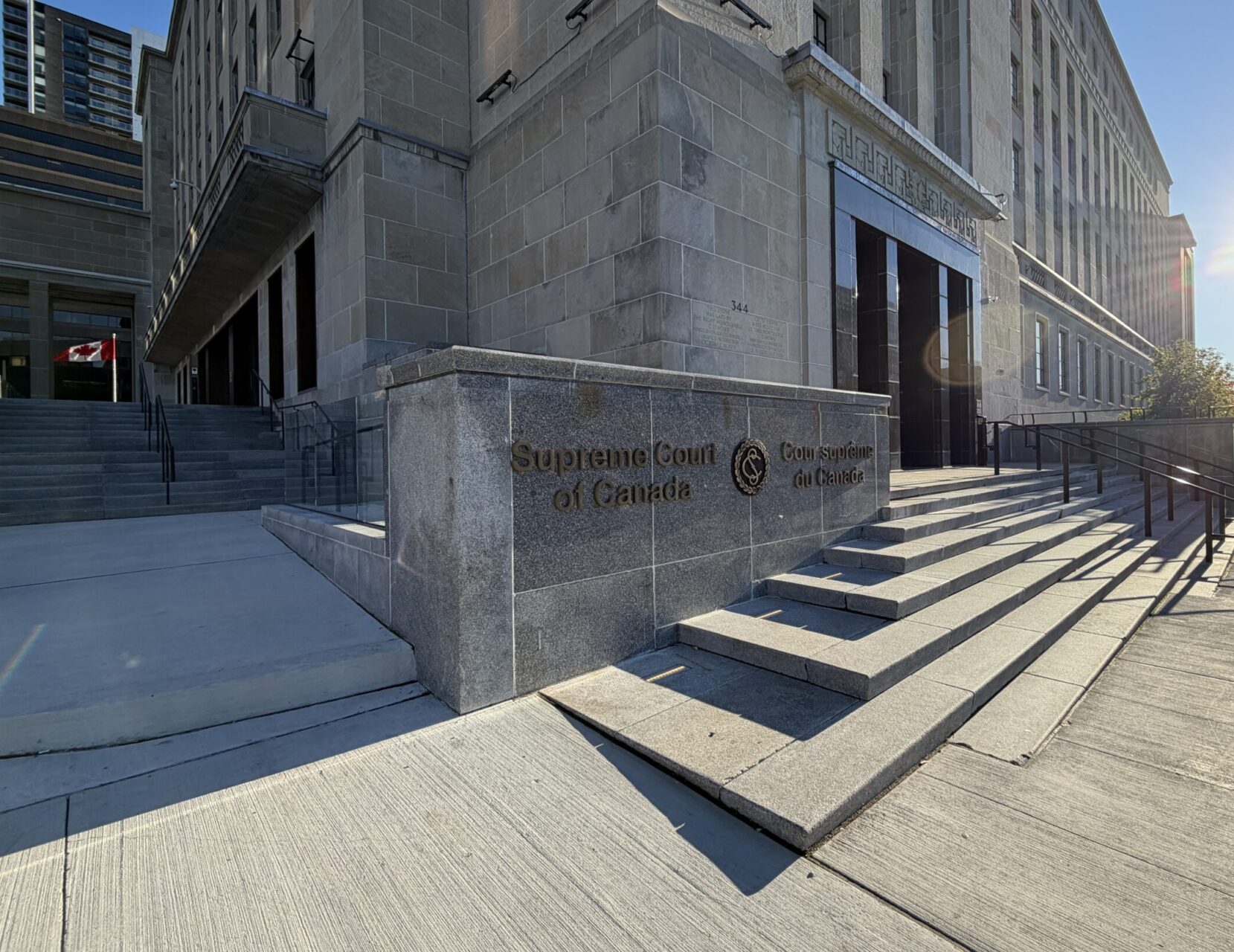
Did the Supreme Court of Canada uphold Bill 21?
Mostly. A slim majority of Supreme Court judges, 4 out of 7, upheld Bill 21, with the exception of the application of section 8 to members of Quebec’s National Assembly, whom the Court said have a right under section 3 of the Charter to “be qualified for membership” in the Quebec legislature. Section 8 requires personnel to exercise their functions with their faces uncovered.
A minority of judges would have struck down other parts of the law. Justice Karakatsanis and Justice O’Bonsawin would have struck down parts of the law for unjustifiably infringing section 23 of the Charter, which protects minority language education rights. Justice Karakatsanis, Justice O’Bonsawin, and Justice Martin would have struck down the religious symbols ban for infringing section 28 of the Charter, which states: “Notwithstanding anything in this Charter, the rights and freedoms referred to in it are guaranteed equally to male and female persons.”
Did the Court find that courts may issue declarations that rights have been violated even after the notwithstanding clause has been invoked?
Yes. One of the most contentious issues argued in the case was whether courts can exercise their inherent jurisdiction to render declaratory judgements opining on a law’s compliance with section 2 to 7 and 15 of the Charter, even after a legislature has invoked the notwithstanding clause, rendering the court’s opinion legally moot.
Three judges, Chief Justice Wagner, Justice Côté and Justice Rowe, would have found such declarations are not available and would “substantially diminish the effect” of section 33.
However, the four remaining judges found declaratory relief is possible and that it can have practical utility for those attempting to convince voters and legislators that a particular law violates rights.
Did the Court issue a declaration that religious, equality and expressive rights were violated?
No. Justice Karakatsanis, Justice O’Bonsawin and Justice Kasirer would have issued such a declaration but the other four judges did not join them.
Did the court put substantive limits on the use of the notwithstanding clause?
No, but they did not rule this out. Justices Karakatsanis and O’Bonsawin agreed with the federal government’s argument that there may be cases where repeated use of section 33 is unconstitutional. This viewpoint did not attract the support of a majority of the Court.