Decision allows for moot declarations but majority declines to issue one
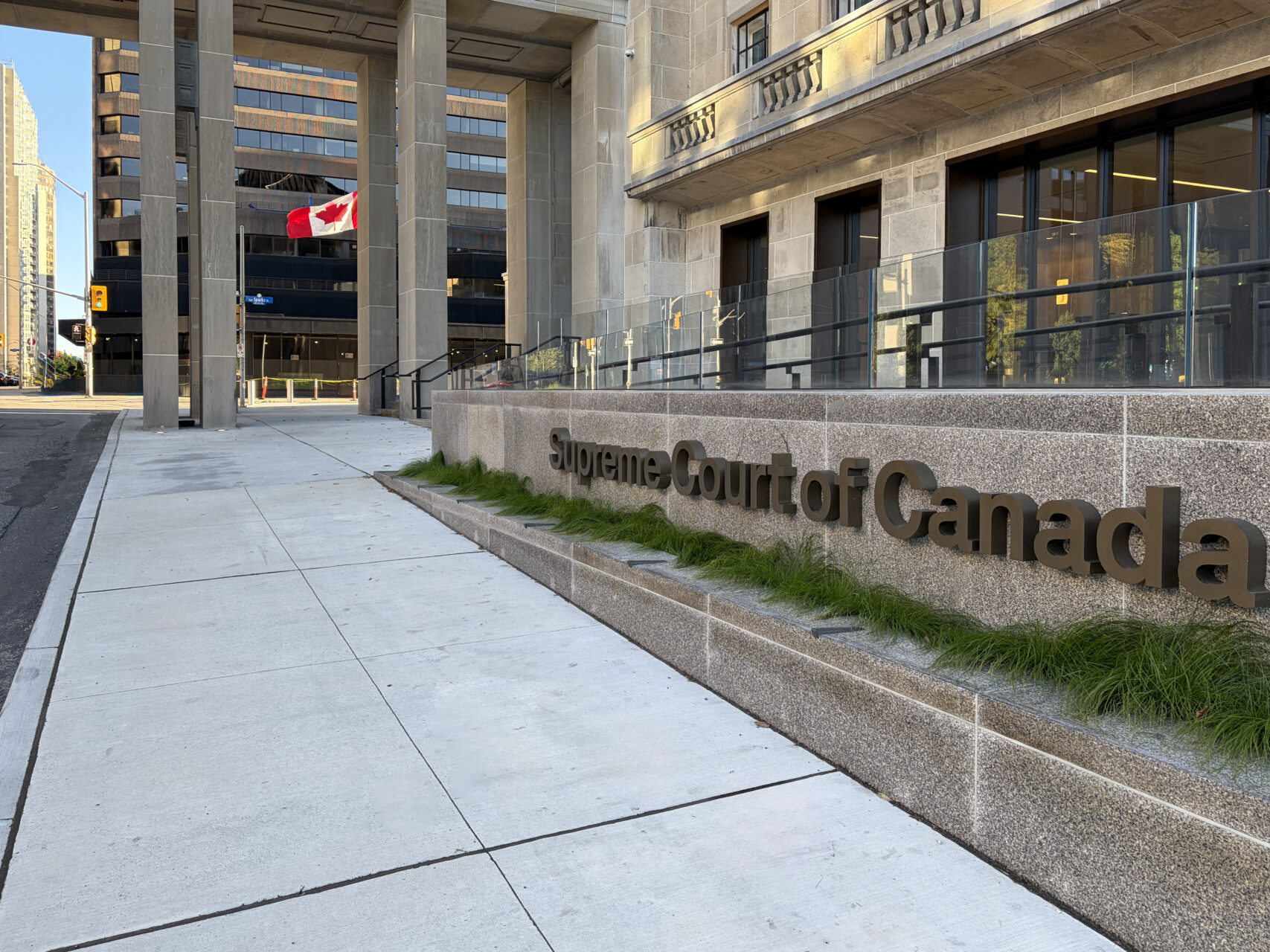
OTTAWA – In a decision released Friday, the Supreme Court of Canada has mostly upheld Quebec’s secularism law, Bill 21, while at the same time finding 4 to 3 that courts may issue declarations that rights have been violated despite the invocation of the notwithstanding clause. A majority of the Court declined to issue such a declaration in this case.
In one of the most significant constitutional cases in a generation, a majority of the Court ruled that Quebec validly invoked the notwithstanding clause of the Canadian Charter of Rights and Freedoms when it enacted the Loi sur la laïcité de l’État (Bill 21), with the exception of the law’s application to members of Quebec’s National Assembly. Bill 21 bans certain public sector employees, including teachers and police officers, from wearing religious symbols while at work. It was challenged for infringing on public sector workers’ constitutional rights to freedom of expression and freedom of religion.
The Quebec government pre-emptively invoked Section 33, also known as the notwithstanding clause, to allow the law to operate notwithstanding guarantees to those rights. Section 33 of the Charter allows a legislature to derogate from the Court’s interpretation of certain sections of the Charter for five years at a time, unless renewed.
The case, Hak v Attorney General of Quebec, also known as English Montreal School Board v Attorney General of Quebec, was about much more than Bill 21. The court also considered whether courts can issue declarations that rights have been violated even when the notwithstanding clause has been validly enacted and where the law will continue to stand. Four judges found that such declaratory relief is available. Three judges found that it is not.
The CCF intervened in the case to argue that courts cannot award damages under section 24(1) of the Charter in the event that judges are allowed to make moot declarations of breach, because doing so would undermine the purpose of the notwithstanding clause and upset the balance between courts and legislatures.
Christine Van Geyn, Interim Executive Director for the CCF said she was not surprised to see how “fractured” the court was on the many issues in the case.
“Bill 21 is polarizing for Canadians,” Van Geyn said. “But make no mistake, this case was far less about Bill 21 itself than about the interpretation of the notwithstanding clause and the balance between the courts and the legislature. By rejecting the suggestion that the court can place substantive limits on section 33, the majority got the decision largely right,” she added.
“While there is controversy over the majority’s finding that courts can issue moot declarations once the notwithstanding clause has been invoked, the outcome could have been a lot worse. Whatever your views on Bill 21, the case at the end of the day is about ensuring section 33 is interpreted in a way that is consistent with the actual text of the provision,” Van Geyn went on.
“Section 33 is a part of our constitution, and its inclusion in the Charter is the reason we have a Charter at all. Allowing a court to shift the nature of that compromise decades later would be undemocratic.”
Josh Dehaas, Interim Litigation Director for the CCF, said that it is now clear that whatever one’s views of Bill 21 may be, the focus of the debate must be in Quebec’s elected legislature.
Earlier this year, the CCF published Section 33 on Trial by Van Geyn, an examination of the history of the notwithstanding clause and the legal arguments advanced in the Bill 21 case. The book is available for free digital download here or in hard copy on Amazon here.
The CCF was represented in this intervention by George Avraam, Haadi Malik, and Anton Rizor of Baker & McKenzie LLP.
For further information, contact:
Christine Van Geyn
Executive Director (Interim)
Canadian Constitution Foundation
1-888-695-9105 x. 103
[email protected]
Josh Dehaas
Litigation Director (Interim)
Canadian Constitution Foundation
1-888-695-9105 x. 104
[email protected]