
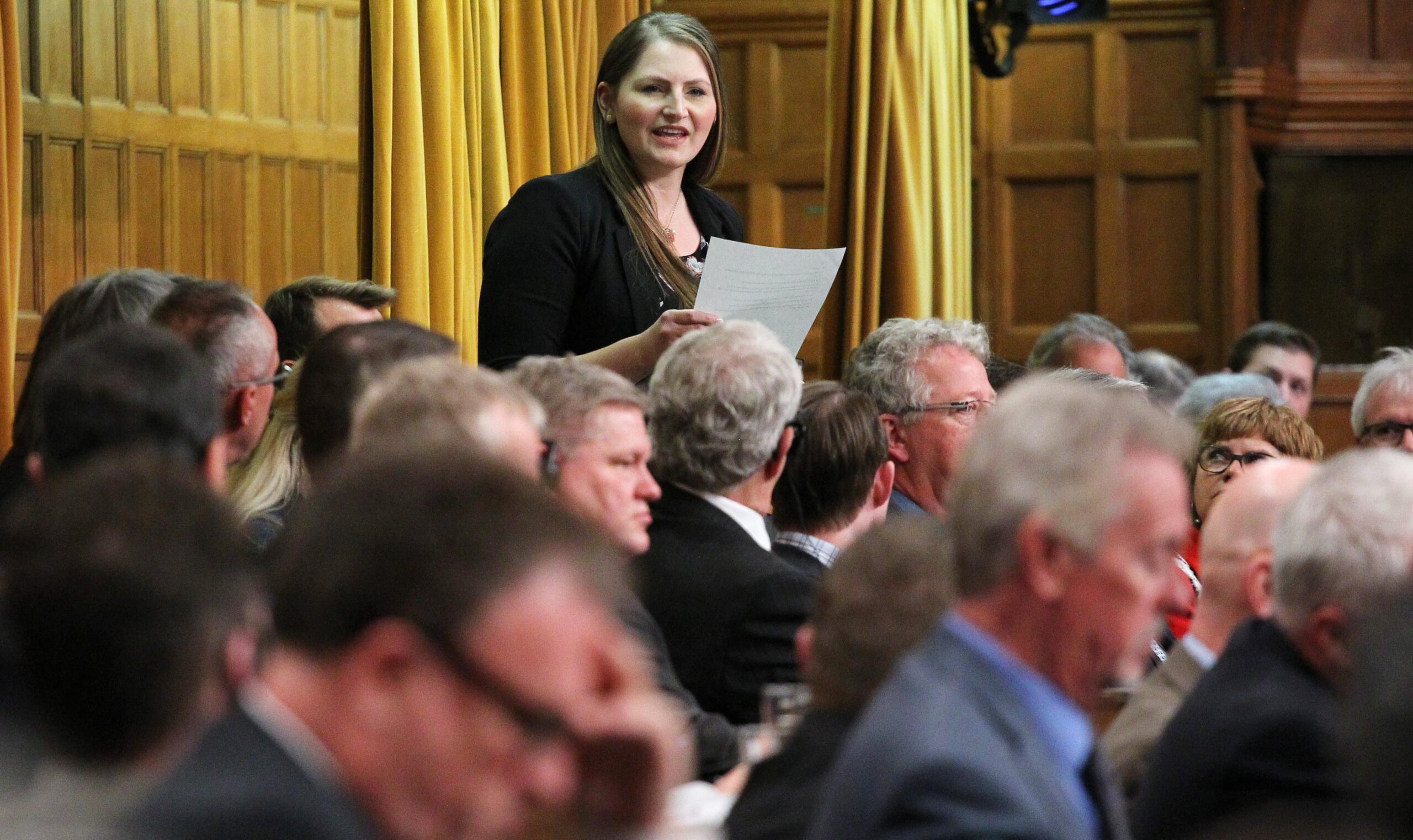
OTTAWA – The Supreme Court of Canada has upheld a Trudeau-era law that allows the Carney government to send certain sensitive information to a secret, executive-controlled committee, with the threat of jail time for Parliamentarians who speak about the matters sent to the committee.
In Ryan Alford v Attorney General of Canada, Professor Ryan Alford of Lakehead University challenged section 12 of the National Security and Intelligence Committee of Parliamentarians Act (NSICOP Act). Alford argued that section 12 unconstitutionally limited the Parliamentary privilege of freedom of speech for MPs, which is essential for them to hold the government to account. The Ontario Superior Court agreed with Alford that this severe limit required a constitutional amendment. The Ontario Court of Appeal, however, disagreed and held that section 12 was within Parliament’s legislative authority under section 18 of the Constitution Act, 1867 to define parliamentary privileges, immunities and powers.
In an 8-1 decision, Justice Rowe writing for the majority agreed with the Court of Appeal. Justice Rowe found that although section 18 “cannot be used in a manner that would fundamentally undermine Parliament’s function as a legislature in Canada’s Westminster-style parliamentary democracy,” the NSCIOP Act does not do so. Justice Rowe said that this was because it applies “only to the disclosure of specific national security information that was obtained by members of the Committee through their participation on the Committee.”
The CCF intervened in the case to argue that there can be no Parliamentary freedom of speech in a system that delegates its limits to the executive branch. The CCF explained that such delegation risked shrinking Parliamentary free speech so much that the executive could exclude any speech or debate that may offend or inconvenience the executive, such as Trudeau’s controversial India trip or the Winnipeg lab leak scandal. The CCF also argued that more than 150 years of history shows that Parliament is capable of keeping state secrets. Parliament closed its doors to debate sensitive issues during World War Two, and Parliamentary committees conducted in camera meetings during the 1970 October Crisis.
Justice Côté would have sided with the CCF:
[143] Perhaps most importantly, by transferring the determination of whether speech in Parliament is licit to the executive and the power to punish for certain speech to the courts, the NSICOP Act fundamentally undermines the separation of powers. While I understand the concern about judicial scrutiny of Parliament’s ability to amend its privileges, I agree with the Canadian Constitution Foundation that such a concern “crumbles” in this case. This is because the NSICOP Act goes too far and legislates the “impairment of parliamentary independence” by mandating outside interference from the executive branch and the courts in the regulation of parliamentary speech (I.F., at para. 14). In so doing, s. 12 of the NSICOP Act undermines the centuries-old purpose of the parliamentary privilege and free speech: ensuring parliamentary independence from the executive and the courts.
[150] As the intervener the Canadian Constitution Foundation highlights, Parliament has tools to maintain Canada’s security, the accountability of the executive, and free speech in Parliament (I.F., at paras. 16‑21). Since Confederation, Parliament has proven its ability to regulate debate without any catastrophic disclosure of information and without the need for threats of criminal sanction (N. A. MacDonald, “Parliamentarians and National Security in Canada” (2011), 34:4 Can. Parl. Rev. 33, at p. 36; H. MacIvor, “The Speaker’s Ruling on Afghan Detainee Documents: The Last Hurrah for Parliamentary Privilege?” (2010), 19 Const. Forum 11, at pp. 12‑13). Indeed, the appellant argues — and I have been shown nothing to suggest otherwise — that since 1689 no Commonwealth nation, even those under severe crisis, or with weak democracies, has legislatively authorized the prosecution of parliamentarians for what they said in a legislature (A.F., at para. 3).
The CCF was represented by Paul-Erik Veel and Amy Goudge of Lenczner Slaght LPP.
Veel said that although the outcome is disappointing, he was pleased that the Court recognized that Parliament must have the powers to carry out its essential functions as a deliberative law-making assembly in which the executive is held to account, and that free speech is at the core of Parliament’s powers.
“This decision sends a clear message that any limitations on free speech that undermine Parliament’s role within our constitutional order will not be acceptable,” Veel added.
Alford told the CCF that although he too was disappointed on the specific outcome, he was “glad to see the court clarified there are constitutional limitations on section 18.”
CCF Interim Litigation Director Josh Dehaas noted that, over the past week alone, Parliamentary committees have gone in camera several times, showing that they are more than capable of handling sensitive information without the executive taking control and threatening jail time.
“It is unfortunate that the Supreme Court has decided Parliamentarians can no longer speak out when they see fit,” he said. “The result of this decision is that it is even more difficult for MPs to do what we elect them to do: hold the ministers and prime minister to account.”
CCF Interim Executive Director Christine Van Geyn thanked Professor Alford for taking this case to the Supreme Court. “What Professor Alford did was remarkable, and at least we now know there are limits on how far parliamentary privileges like free speech can be circumscribed.”
Josh Dehaas
Litigation Director (Interim)
Canadian Constitution Foundation
1-888-695-9105 x. 104
[email protected]
Christine Van Geyn
Executive Director (Interim)
Canadian Constitution Foundation
1-888-695-9105 x. 103
[email protected]


